If you have ever walked into your child’s playroom only to find yourself stepping over a sea of plastic, feeling your chest tighten, and wondering why on earth your kids "have nothing to play with" despite the clutter...you are not alone. Every single parent has been there. We buy toys to invite joy and independence into our homes, but when every single item is left out on display simultaneously, the room stops feeling like a creative paradise. To a child’s developing nervous system, a room packed with endless choices looks like an overwhelming wall of static friction.
Too many options don't invite deep play. They trigger immediate decision fatigue.
When children face a mountain of choices, they experience a subtle cognitive overload that blocks them from starting play independently. They wander from item to item, graze on a few pieces, and quickly abandon their things. Shifting how the room functions isn't about rigid rules or stripping away the fun; it’s an empowering design choice that clears the visual noise. By organizing your space around a thoughtful rhythm, you turn your playroom into a calm, predictable environment that actively trains your child's decision-making skills and builds the beautiful habit of independent play.
What Is the Difference Between the Toy Hub and Toy Rotation?
The Toy Hub is the permanent physical anchor of your playroom floor plan, while Toy Rotation is the fluid strategy used behind the scenes to manage your inventory. Reframing the space successfully requires establishing a clean boundary between these two distinct elements:
-
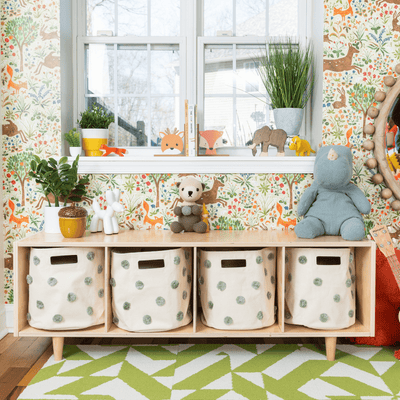
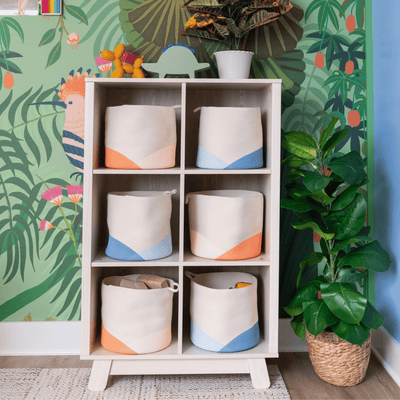
The Toy Hub: This is a single, dedicated shelving unit or built-in station that houses a small, highly curated selection of toys that are currently active and available for play. There is exactly one lightweight bin or basket per type of toy: one for small-world animals, one for transportation vehicles, one for building blocks, and so on.
-
The Toy Rotation: Instead of leaving your child's entire toy library out in the room, you divide the collection. The active toys stay in the Toy Hub, while the remaining collection is placed in backstock storage (a closet, a chest, or under a bed) where it is temporarily unavailable to the kids. Every few weeks or months, you simply swap a few stale items from the Toy Hub with fresh pieces from your backstock library.
By limiting what is immediately active, you drastically reduce the mental steps required for a child to choose an activity. They can walk into the room, assess their choices calmly, and lock onto a focused project without hitting a wall of analysis paralysis.

How Does Restricting Access to Toys Improve Communication?
Restricting constant access to your entire toy inventory improves communication by creating an authentic, real-life reason for children to articulate their desires and advocate for themselves. When every single toy a child owns is left out on open shelves all day long, they never have to think about or vocalize what they want; they simply grab whatever is in their direct line of sight.
By keeping a tight, intentional selection in the Toy Hub while housing the remaining collection in rotation stock, you change the room's dynamic entirely.
Kids are incredibly smart, and they quickly learn exactly what exists in their overall toy library. Because they don't have automatic, unmonitored access to everything at once, older children are empowered to thoughtfully reflect on what they miss and actively express interest by requesting specific materials to be rotated into the room. This gentle boundary shifts them from passive consumers of a cluttered space into active self-advocates who can plan, articulate, and intentionally shape their own play environment.
Direct from the Play Experts
Sustained Focus Thrives on Constraints
Managing what is active and unavailable does something incredible for a child's resourcefulness. When kids can't simply reach for a hyper-specific, scripted toy to solve a problem, they have to manipulate the versatile materials right in front of them to engineer their ideal outcome. This structural constraint is exactly where genuine ingenuity, critical thinking, and sustained focus thrive.

What Are the 4 Mindset Benchmarks for an Independent Toy Rotation System?
Successfully transitioning your family into an empowering, independent toy rotation system isn't about buying new organizational gadgets. It requires committing to these four core shifts in how you view the space:
-
1. Intentional Limits Fuel Genuine Ingenuity
-
The Role in Your Space: Embracing a curated layout as a developmental tool.
-
How to Think About It: Understand that a child doesn't need twenty different toys out simultaneously to be entertained. A limited number of open-ended options forces them to use different parts of their brain to expand, combine, and sustain their play naturally.
-
-
2. Separate the "Active" from the "Backstock"
-
The Role in Your Space: Establishing absolute visual clarity in the room.
-
How to Think About It: Commit to a system where the toys on display represent a mere fraction of the overall collection. Active items live in the Toy Hub; everything else goes into unavailable backstock—stored completely out of independent child access.
-
-
3. Stop Treating Dumping as a Mess
-
The Role in Your Space: Reframing how independent play begins.
-
How to Think About It: Recognize that when a child pulls a single, predictable bin out and dumps it onto the open floor, they are actively clearing a canvas to execute their building plans. Dumping is a structural tool to initiate play, not a discipline problem.
-
-
4. Let Your Kids Advocate for the Swap
-
The Role in Your Space: Using the framework to build language skills.
-
How to Think About It: When play starts to feel stale or a child specifically asks for an unavailable toy in storage, treat it as a massive victory for their self-reflection and negotiation skills rather than a failure of the current layout.
-
Comparison: The Neurological Path of Play Choice
| Layout Approach | Initial Environmental Input | Nervous System Reaction | Final Behavioral Outcome |
| Overcluttered Room | Mountain of overlapping choices left out simultaneously. | Decision fatigue, cognitive overload, and high visual noise. | Play is quickly abandoned; aimless "grazing" from bin to bin. |
| Rotated Toy Hub | Curated active bins arranged in a single-layer system. | A clear, calm mental canvas with low physical friction. | Independent focus, creative resourcefulness, and deep execution. |